
Solar Export Limiting Explained: What Homeowners Need to Know

Solar export limiting is becoming an important part of residential solar installations in Western Australia, particularly for homeowners looking to install larger solar systems. Understanding how export limiting works can help you make better decisions about your solar system, battery storage and future energy needs.
What Is Solar Export Limiting?
Solar export limiting is a control mechanism that restricts the amount of excess solar electricity a home can send back to the electricity grid.
When your solar panels generate more electricity than your home is using, the surplus would normally be exported to the grid. With an export limit in place, your solar system continuously monitors household electricity consumption and adjusts its output to ensure that grid exports remain within the approved limit.
For example, a system may have a 1.5kW export limit. This means that no more than 1.5kW of excess electricity can be exported to the grid at any given time.
How Does Solar Export Limiting Work?
Solar generation changes throughout the day depending on sunlight, while household electricity consumption changes as appliances are switched on and off.
Without export limiting, solar generation on a clear day generally follows a smooth curve, increasing through the morning, reaching its highest point around midday and then declining through the afternoon.
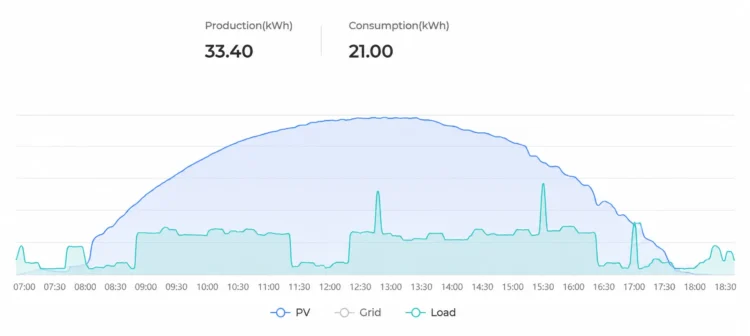
With export limiting, however, solar production can adjust dynamically based on the home’s electricity consumption. When household demand increases, the solar system can produce more electricity to meet that demand. When demand decreases, solar production can be reduced to prevent exports from exceeding the approved limit.
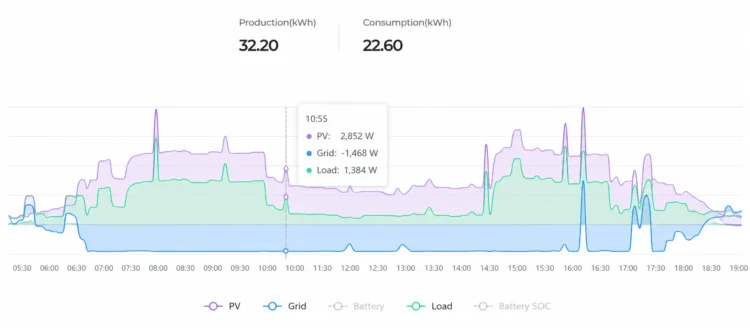
The important point is that export limiting controls grid exports, rather than simply switching the solar system off. The system continues to supply electricity to your home while managing the amount of excess power sent to the grid.
Why Is Solar Export Limiting Used?
Electricity networks need to maintain stable voltage and frequency. As more homes install solar panels, large amounts of electricity can be exported to the grid at the same time, particularly during periods of strong sunlight and lower household demand.
Export limits help manage these conditions and allow network operators to control the amount of distributed solar energy being exported into the electricity network.
For homeowners, this can also make it possible to install a larger solar system than would otherwise be permitted under unrestricted export conditions.
Can Export Limiting Allow a Larger Solar System?
One of the key benefits of export limiting is that it can allow homeowners to install a higher-capacity solar system while keeping grid exports within the network’s requirements.
A larger system can be particularly useful for homes with higher electricity consumption or households planning to increase their electricity use in the future.
A larger solar system can help support:
- Greater air-conditioning use
- Battery charging
- Electric vehicle charging
- Electric heat pump hot water
- Electric induction cooking
- Pool heating
- Other future electrical loads
This means your solar system can be designed not only around your current electricity consumption but also around how your household may use energy in the future.
What Happens When You Have a Solar Battery?
A battery can work alongside an export-limited solar system to make better use of excess solar generation.
When your solar panels produce more electricity than your home needs, the surplus can be directed to charge your battery. This allows you to store solar energy for later use instead of immediately sending all the excess electricity to the grid.
Once the battery reaches full capacity, the export limit can then control how much of the remaining excess solar electricity is exported.
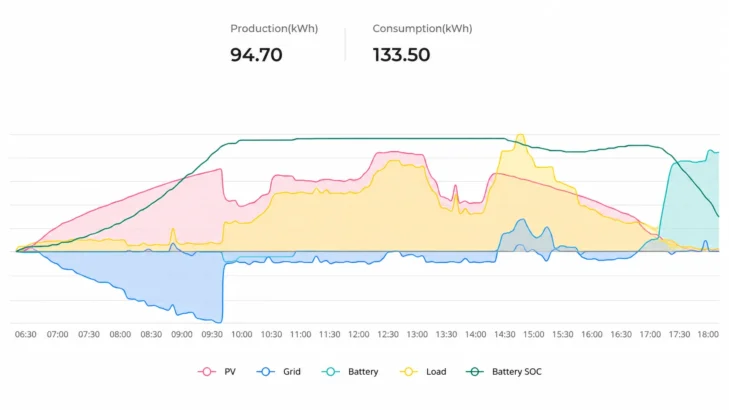
This makes battery storage particularly useful for households that generate significant amounts of solar electricity during the day but use more electricity during the evening.
Does Export Limiting Mean You Get Less Solar Power?
Export limiting does not necessarily mean that you receive less benefit from your solar system.
The electricity generated by your solar panels can still be used directly by appliances and other loads in your home. Excess electricity can also be stored in a battery if one is installed.
The export limit primarily affects how much excess electricity can be sent to the grid. It does not prevent your solar system from supplying electricity to your home when there is demand for it.
For this reason, household energy consumption, battery storage and the timing of electricity use are important when assessing an export-limited solar system.
Solar Export Limiting and Emergency Solar Management
Homeowners in Western Australia should also understand the connection between solar export limiting and Emergency Solar Management (ESM).
During periods of high rooftop solar generation and low electricity demand, network operators may need to manage the amount of solar electricity being supplied to the grid. Under ESM arrangements, some eligible solar systems may be remotely switched off during certain events.
Depending on the applicable requirements and your electricity arrangements, an approved permanent export limit may provide a pathway for some systems to avoid certain ESM requirements.
Because network and retailer requirements can change, homeowners should confirm the current conditions that apply to their property before choosing an export-limited system.
Is a 1.5kW Export Limit a Problem?
A 1.5kW export limit does not necessarily reduce the usefulness of a larger solar system.
For example, if your home is consuming electricity during the day, solar power can be used directly by your appliances rather than being exported. If you have a battery, additional solar generation can be stored for use later.
The key consideration is therefore not simply how much electricity you can export, but how much solar electricity your home can use or store.
What Should Homeowners Consider?
Before installing an export-limited solar system, consider your current electricity consumption and future energy plans. Think about whether you may add a battery, electric vehicle, heat pump hot water system, pool heating or other significant electrical loads.
Your installer should also ensure that the solar inverter, export control system and battery, if applicable, are configured to meet the relevant network requirements.
Final Thoughts on Solar Export Limiting
Solar export limiting is a practical way to manage the amount of excess solar electricity sent to the grid while potentially allowing homeowners to install larger solar systems. Rather than simply restricting the benefits of solar, an appropriately designed export-limited system can help you use solar power in your home, charge a battery and prepare for increasing electricity demand.
Make Your Solar System Work Smarter
The right export-limited solar system can help you maximise your own solar use while preparing your home for future energy needs. Fritts Solar can help Perth homeowners understand solar export limiting and choose a system designed around their current electricity consumption, battery requirements and future energy plans. Contact us today to discuss your requirements and find the right solar solution for your home.