
Rising Battery Adoption Leads to Lower Electricity Bills in 2026/27
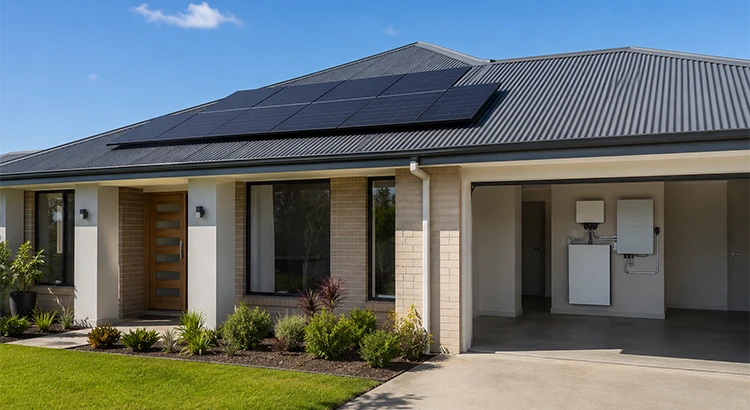
Australian households are set to benefit from lower electricity costs in the 2026/27 financial year, with the Australian Energy Regulator (AER) announcing lower benchmark electricity prices across most regions covered by the Default Market Offer (DMO).
The DMO acts as a regulated safety net price for customers on standing electricity offers in New South Wales, South East Queensland and South Australia. It also serves as the reference price retailers use when advertising and comparing market offers. While many households are already on market plans, the DMO continues to influence pricing across the broader retail electricity market.
Although higher network charges were expected to increase electricity bills this year, declining wholesale electricity prices have more than offset those increases in most regions. One of the biggest reasons behind the lower wholesale costs is the rapid growth of battery storage and renewable energy generation, particularly wind power. Together, these technologies are helping improve the efficiency of Australia’s electricity system while reducing reliance on more expensive forms of generation during periods of high demand.
Under the final DMO determination, flat rate residential benchmark prices will fall between 3.4% and 7.2% across New South Wales and South East Queensland. South Australia is the only region where residential customers will see a modest increase of 1.4%, largely due to higher network costs.
Small businesses are seeing even greater savings, with benchmark electricity prices falling by 6.8% to 11.3%, depending on the region.
The announcement follows similar good news in Victoria, where the Essential Services Commission has reduced the Victorian Default Offer, lowering standard electricity bills by around 5% for households and approximately 6% for small businesses. Across several Australian states, the latest regulatory decisions reflect how changing generation sources are influencing electricity prices.
Why Are Prices Falling Despite Higher Network Costs?
While network charges continue to make up a significant portion of electricity bills (accounting for roughly 39% to 54% of typical DMO costs), the cost of generating electricity has fallen considerably for the coming financial year.
According to the AER, wholesale electricity costs have dropped by between 2% and 14%, driven by several important factors:
- More wind generation supplying low cost renewable electricity
- Increased battery storage across the electricity system
- Reduced reliance on expensive gas and hydro generation during evening peak demand
- Lower electricity futures prices
- Reduced volatility in the wholesale electricity market
- Lower environmental scheme costs
- Reduced retailer operating costs
Each of these factors has contributed to a more stable wholesale electricity market. Lower price volatility means fewer extreme price spikes, which can ultimately benefit both electricity retailers and consumers.
In simple terms, electricity has become cheaper to produce, helping offset rising network costs and delivering lower overall benchmark prices for most customers. South Australia remains an exception, with higher network charges contributing to its small residential price increase.
The growing role of batteries was also highlighted by Energy Minister Chris Bowen following the introduction of the federal battery rebate. He explained that batteries are helping “flatten the peak” by storing renewable energy generated during the day and supplying it during the evening, reducing reliance on coal and gas while putting significant downward pressure on electricity prices.
This demonstrates how battery storage is becoming an increasingly important part of Australia’s energy transition, supporting renewable generation while improving overall grid reliability during periods of high demand.
Solar Sharer Offer Included in Final DMO
The final DMO determination also confirms the introduction of the Solar Sharer Offer (SSO), designed to encourage households to use more electricity during the middle of the day when rooftop solar generation is abundant.
Retailers with more than 1,000 customers will be required to offer eligible households a tariff that includes three hours of free daytime electricity.
The free electricity periods are:
- 11:00 am to 2:00 pm in New South Wales and South East Queensland
- 12:00 pm to 3:00 pm in South Australia
The offer includes a daily free usage allowance of 24 kWh, after which normal time of use rates apply.
The concept is straightforward. Rather than curtailing excess solar generation during the middle of the day, the Solar Sharer Offer encourages households to run energy intensive appliances such as washing machines, dishwashers, pool pumps and electric vehicle chargers while wholesale electricity prices are often extremely low or even negative.
It reflects the growing shift towards making better use of Australia’s expanding rooftop solar generation while improving overall grid efficiency.
The DMO Is Still Not the Cheapest Deal
While the Default Market Offer provides an important benchmark, the AER continues to remind consumers that it is not designed to be the cheapest electricity plan available. Only around 8% of households remain on standing offers, with the majority already choosing discounted market plans offered by electricity retailers.
Even so, the DMO remains important because it establishes the reference price retailers use when advertising discounts and provides consumers with a standard benchmark for comparing electricity offers.
For the first time, the 2026/27 determination also introduces tariff caps, limiting maximum daily supply charges as well as usage rates alongside annual electricity costs. These changes improve pricing transparency and make it far easier for households to compare electricity plans across flat rate, time of use, and newer options such as the Solar Sharer Offer.
As electricity pricing continues to evolve alongside greater renewable energy and battery adoption, consumers are likely to see more tariffs designed to encourage electricity use at times when clean energy is most readily available. This reflects the broader transformation of Australia’s electricity market as battery storage becomes an increasingly important part of delivering a more flexible and efficient energy system.
Thinking About Adding a Solar Battery?
The growing impact of battery storage on Australia’s electricity market shows just how valuable home batteries have become. By storing excess solar energy produced during the day for use in the evening, a battery can help reduce reliance on the grid, increase self-consumption of solar power and improve long-term energy savings.
Fritts Solar helps homeowners across Perth make the most of their solar investment with premium solar battery solutions from trusted brands. Whether you’re adding battery storage to an existing solar system or planning a new installation, our experienced team can recommend the right solution for your energy needs. Get a free quote today and let our experts help you choose the right battery for your home.