
Oversizing Your Solar Array: Why Panels and Inverters Don’t Need to Match Exactly
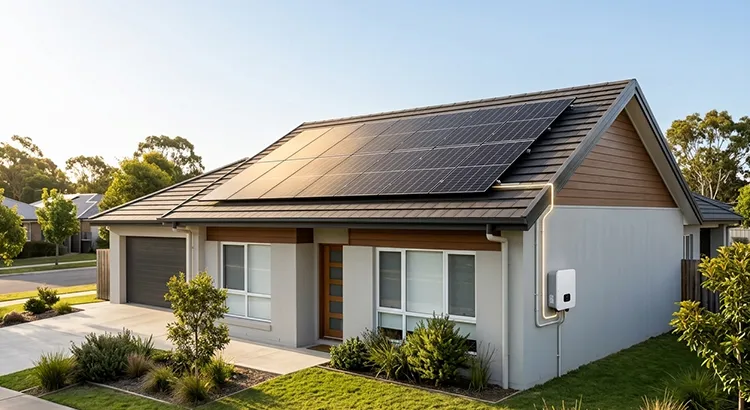
If you’ve ever received a solar quote showing 6.6 kW of solar panels paired with a 5 kW inverter, you might have wondered why the two numbers don’t match. It can seem as though the inverter is too small to make full use of the panels.
In reality, this is a deliberate and widely accepted solar design strategy known as solar array oversizing. Rather than reducing system performance, oversizing often helps maximise daily energy production and improve the overall return on your solar investment. When carried out within manufacturer specifications and Australian regulations, it allows your system to generate more usable electricity across the day without affecting the inverter’s warranty or reliability.
This guide explains how solar array oversizing works, why it is commonly recommended, how much oversizing is generally permitted in Australia, and when a smaller system may still be the better option.
What Is Solar Array Oversizing?
Solar array oversizing means installing a solar panel array with a greater total capacity than the inverter’s rated AC output.
The inverter is the component that converts the direct current (DC) electricity produced by the solar panels into alternating current (AC) electricity that powers your home. While the inverter has a maximum output rating, the solar panels do not consistently produce their full rated capacity throughout the day.
Instead, solar production gradually increases during the morning, reaches its highest level around midday under favourable conditions, and then declines again in the afternoon. By installing additional panel capacity, the inverter is supplied with more available energy over a longer period, allowing it to operate closer to its rated output for more hours each day.
You can think of the solar panels as collecting as much sunlight as possible, while the inverter controls the maximum amount of electricity delivered to your home. Although the inverter limits peak output, the larger panel array increases overall energy generation across the day.
Does Clipping Waste Energy?
One of the first questions homeowners ask is whether oversizing wastes electricity.
The answer is yes, but only to a limited extent.
When the solar panels produce more electricity than the inverter can convert, the inverter limits its output to its rated capacity. This is known as clipping. Any electricity above the inverter’s maximum output during those brief peak periods is not converted into usable AC power.
However, this small loss is generally outweighed by the additional electricity generated during the morning and afternoon. Because the larger solar array captures more sunlight outside the midday peak, the system usually produces more total energy over the course of the day than a system with perfectly matched panel and inverter capacities.
Modern inverters are designed to operate efficiently at or near their rated output, and many manufacturers allow solar arrays to be oversized within their specified DC input limits. When installed according to these guidelines, oversizing does not affect warranty coverage and can improve the annual energy yield of the system.
How Much Can You Oversize? The 1.33 Rule
In Australia, the Clean Energy Regulator sets guidelines for systems claiming Small-scale Technology Certificates (STCs).
For systems without a DC-coupled battery, the maximum solar array capacity eligible under the standard STC framework is generally 1.33 times the inverter’s rated output. This allows homeowners to install additional panel capacity while remaining within the recognised design limits.
The following table shows typical examples.
| Inverter Size | Max. Solar Array Oversizing |
| 3 kW | 3.99 kW |
| 5 kW | 6.65 kW |
| 8 kW | 10.64 kW |
| 10 kW | 13.3 kW |
| 15 kW | 19.95 kW |
This is one of the main reasons why a 6.6 kW solar panel system with a 5 kW inverter has become one of Australia’s most popular residential solar configurations. It offers an excellent balance between installation cost and annual energy production while remaining within the standard oversizing guideline.
When a DC-coupled battery is included, larger solar arrays may be possible because the battery can store excess solar generation. In these situations, the allowable panel capacity is generally determined by the inverter manufacturer’s maximum DC input ratings rather than the standard 1.33 ratio. The exact limits vary depending on the inverter model and battery configuration.
Why 5 kW Inverters Have Been a Popular Choice in Western Australia
For many years, 5 kW inverters have been the preferred choice for residential solar systems across Western Australia. This has largely been influenced by electricity network requirements and feed-in arrangements rather than by technical limitations of the equipment itself.
Historically, single-phase homes connected to the Western Power network commonly installed 5 kW inverters because of network connection limits. At the same time, systems with inverter capacities of 5 kW or less were generally eligible for the Distributed Energy Buyback Scheme (DEBS), making them financially attractive for many households.
Although current connection rules provide greater flexibility for larger inverter capacities, many homeowners still find that pairing a 6.6 kW solar array with a 5 kW inverter provides excellent value. The combination delivers strong daily energy production while remaining suitable for many residential applications.
Current Solar Connection Rules in Western Australia
Solar connection requirements in Western Australia have changed, allowing households and small businesses to install larger inverter capacities under standard connection arrangements than was previously possible.
Property owners now have two broad export pathways available depending on the equipment installed and the level of grid interaction supported by the system.
- Standard export: This option provides a fixed export limit and does not require additional communications capabilities.
- Future-ready export: Systems using compatible inverters and batteries can support advanced grid management features, allowing participation in future flexible export programs where available.
Although larger inverter capacities are now permitted for many new installations, oversizing remains an effective design strategy. The best system still depends on household electricity consumption, roof space, battery plans and applicable incentive programs.
Common Oversized System Configurations
The following examples illustrate some of the most common oversized solar system configurations.
Solar-Only Systems
| Solar Array | Inverter | Supply | DEBS Eligible |
| 3.9 kW | 3 kW | Single-phase | Yes |
| 6.6 kW | 5 kW | Single or three-phase | Yes |
| 10.6 kW | 8 kW | Single or three-phase | No |
| 13.3 kW | 10 kW | Single or three-phase | No |
| 19.9 kW | 15 kW | Three-phase | No |
These system sizes intentionally use a larger solar array than the inverter rating while remaining within approved manufacturer specifications.
Systems with a DC-Coupled Battery
When a DC-coupled battery forms part of the system, larger solar arrays may be supported depending on the inverter’s allowable DC input ratings.
| Solar Array | Inverter | Supply | DEBS Eligible |
| Up to 9.9 kW | 5 kW | Single or three-phase | Yes |
| Up to 12 kW | 8 kW | Single or three-phase | No |
| Up to 15 kW+ | 10 kW | Single or three-phase | No |
The exact configuration depends on factors such as maximum voltage, current limits, MPPT design and the inverter manufacturer’s specifications.
When a Smaller System Still Makes Sense
Although oversizing offers many benefits, it is not always the best choice for every property.
- Limited roof space: Some homes do not have enough suitable roof area to install a larger number of solar panels.
- Grid connection restrictions: Certain properties may be subject to local network requirements that influence the maximum system size or export capacity.
- Preference for premium equipment: Some homeowners prefer investing in high-performance panels and premium inverter technology rather than installing the largest possible array.
For larger homes with higher electricity consumption, increasing both panel capacity and inverter size may provide better long-term performance. The ideal system should always be based on the property’s energy usage, available roof space and future electricity needs.
Choosing the Right Solar System Design
Selecting the right solar system involves much more than simply matching the panel capacity to the inverter rating. A well-designed system considers how electricity is used throughout the day, the orientation and size of the roof, future battery plans and local electricity network requirements.
Experienced solar installers also assess the manufacturer’s input limits, Australian standards and the suitability of the equipment for long-term operation. This ensures the system delivers reliable performance while making the most of the available solar resource.
Rather than focusing solely on peak output, the objective is to maximise annual energy generation and increase the amount of solar electricity that can be used within the home.
Final Thoughts on Oversizing Your Solar Array
Oversizing your solar array is not a design mistake. It is a proven approach that allows a larger solar panel array to work efficiently with a properly sized inverter, increasing total energy generation over the course of the day.
Although some electricity may be clipped during brief periods of peak sunshine, the additional energy captured during the morning and afternoon usually results in higher annual production and better overall value. When the system is designed within manufacturer specifications and Australian regulations, oversizing can improve efficiency, support greater self-consumption and help reduce long-term electricity costs.
Whether you are installing a new solar power system, upgrading an existing one or planning for future battery storage, choosing the right balance between panel capacity and inverter size is essential. A professionally designed system that is appropriately oversized can deliver reliable performance and maximise the benefits of your investment for many years to come.