
What Happens to Excess Solar Energy When Your Battery Is Full?
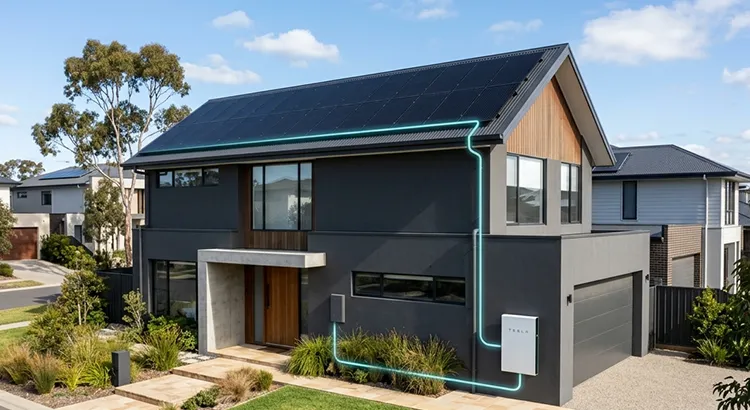
A solar battery gives homeowners a way to store excess electricity generated during the day and use it later when solar production drops. But once the battery reaches full charge, your solar panels may still be producing plenty of electricity. So, where does that extra energy go?
For homeowners with solar batteries in Perth, understanding what happens to excess solar energy can help explain system performance, energy savings and the importance of choosing the right system configuration.
In a typical grid-connected system, solar energy is first used by the home, then directed to the battery. Once the battery is full, any remaining energy may be exported to the grid or the solar system may reduce its output if export is restricted.
Where Does Your Solar Energy Go First?
Your solar system is designed to make use of generated electricity in a practical order.
Solar energy first supplies the electricity your home is using at that moment. This could include your refrigerator, air conditioner, lighting, pool pump, appliances or hot water system.
If your panels are producing more electricity than the home needs, the surplus can be sent to the battery for storage. The battery continues charging until it reaches its configured capacity.
For example, if your panels are producing 7 kW and your home is using 2 kW, the remaining 5 kW may be available for battery charging or export, depending on the battery’s charge level and system settings.
Once the battery is full, it cannot continue storing the additional energy.
What Happens When the Battery Is Full?
When the battery reaches its maximum charge, the inverter manages the remaining solar generation automatically.
There are generally three possible outcomes:
- The solar energy is used by your home.
- The surplus is exported to the electricity grid.
- Solar production is reduced through curtailment.
The outcome depends on your household electricity demand, battery settings, inverter configuration and the export conditions applying to your property.
A full battery does not mean your solar panels stop working. If your home is using electricity, the panels can continue supplying those loads. Any remaining energy then needs to be managed according to the system’s available options.
Can Excess Solar Be Exported to the Grid?
Yes, if your property is permitted to export electricity, excess solar can be sent to the grid after your household demand and battery charging requirements have been met.
Your smart meter records the electricity exported, and your electricity retailer may provide a feed-in tariff for it.
However, exported solar is not necessarily worth as much as the electricity you avoid buying from the grid. Feed-in tariffs are often lower than retail electricity rates, although the actual value depends on your electricity plan.
This is why maximising self-consumption can be important. Using solar energy directly at home or storing it for later can provide greater value than exporting every excess unit.
What Is Solar Curtailment?
If your battery is full and your home is not using enough electricity, you might expect all remaining solar to be exported. However, your property may have an export limit that restricts how much electricity can be sent to the grid.
When the export limit has been reached, the inverter can reduce the amount of solar electricity being generated. This is called solar curtailment.
Curtailment does not damage your panels or mean electricity is being dumped somewhere. The inverter simply limits production because the available energy cannot be used, stored or exported at that moment.
For example, if your home is using 2 kW and your property has a 5 kW export limit, the system may be able to accommodate around 7 kW of solar generation. If the panels could produce more than that, the inverter may reduce their output to remain within the permitted limit.
Can You Avoid Wasting Excess Solar Energy?
You cannot always prevent curtailment, but you can increase the amount of solar energy your household uses.
One of the simplest approaches is to shift flexible electricity consumption into the middle of the day, when solar generation is usually strongest.
Washing machines, dishwashers and dryers can often be scheduled during daylight hours. Pool pumps can also be timed to operate when solar production is high.
Hot water systems are another useful flexible load. Heating water during the day can use surplus solar that might otherwise be exported or curtailed.
If you own an electric vehicle, charging during periods of strong solar generation can provide another opportunity to use excess energy directly.
Smart energy management systems can also help automate some of these loads, allowing your household to make better use of available solar without constant manual adjustments.
Does a Larger Battery Solve the Problem?
A larger battery can store more excess solar, but simply choosing a bigger battery is not always the best solution.
Battery capacity should reflect your household’s electricity consumption and when that energy is needed. A home that uses substantial electricity in the evening may benefit from greater storage, while a household with low overnight consumption may have little use for additional capacity.
Oversizing a battery can also mean paying for storage that is rarely used.
A properly designed system considers solar generation, household consumption, battery capacity, inverter specifications, electricity tariffs and export limits together.
What Should You Check Before Installing a Battery?
If you are considering adding a battery to an existing solar system, start by looking at how your home actually uses electricity.
Your electricity bills can help identify how much energy you consume during the day and how much is used in the evening and overnight. This information can help determine whether battery storage is likely to provide meaningful value and what capacity may be appropriate.
Your existing inverter and switchboard should also be assessed. Depending on the system, adding a battery may require a compatible hybrid inverter, battery inverter or other electrical upgrades.
Export conditions are another important consideration. If your property has a restricted export limit, battery storage may help capture more of your solar generation rather than relying on grid export.
Final Thoughts on Excess Solar When Your Battery Is Full
When your solar battery is full, excess solar energy does not simply disappear. It can continue supplying your home’s electricity needs, be exported to the grid where permitted or be curtailed when the system has reached its available export capacity.
The best way to make the most of your solar investment is to design the system around how your household actually uses electricity. Appropriate battery sizing, smart energy management and daytime use of flexible appliances can help you use more of your solar energy and reduce reliance on grid electricity.
Get a Solar and Battery System Designed for Your Needs
Fritts Solar is a reputed solar installation company in Perth, offering reliable solar and battery solutions for homes and businesses. We assess your energy usage, existing solar system, battery requirements and export conditions to help you choose a solution suited to your property. Contact us today to discuss your solar and battery needs and make better use of the energy your system produces.