SolarEdge Exits the Australian Market: What Happens Next?
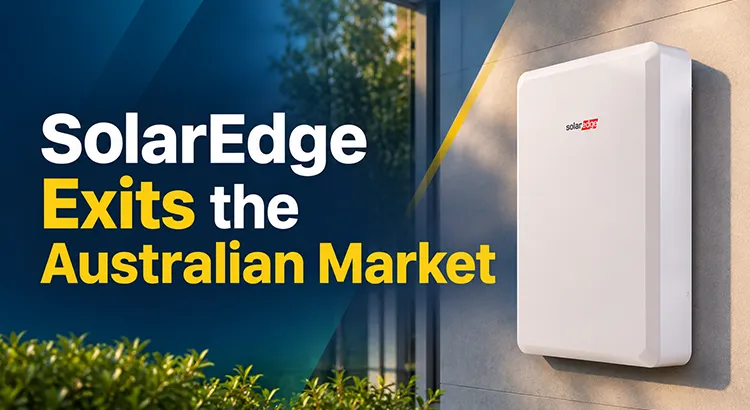
SolarEdge is ending its direct sales and local operations in Australia and New Zealand, marking a significant development in the country’s solar industry. The move affects a well-established supplier of solar inverters, power optimisers, batteries and electric vehicle charging equipment.
The company has reportedly informed Australian installers that final purchase orders will be accepted until 20 November 2026, with the last deliveries expected by 18 December 2026. Following the transition, technical support and service enquiries will move to SolarEdge’s International Tech Centre.
While the decision does not mean SolarEdge is closing its global business, it raises important questions about product availability, warranty support and the future servicing of existing installations.
For Australian homeowners with SolarEdge equipment, the immediate concern is whether their systems will continue operating and how future faults will be handled. For installers, the withdrawal presents challenges around replacement equipment, technical assistance and long-term customer support.
Why Is SolarEdge Withdrawing from Australia?
SolarEdge has built a strong international presence through its inverter technology and panel-level optimisation systems. However, the Australian market has become increasingly competitive, particularly as more manufacturers introduce affordable hybrid inverters and integrated battery solutions.
SolarEdge has not publicly provided a detailed explanation for its decision to discontinue direct operations in Australia and New Zealand. However, the withdrawal comes amid increasing competition in the Australian solar market, where manufacturers compete on product pricing, technology, battery integration and customer support.
Increasing Competition in the Inverter Market
Australia has a diverse range of solar equipment manufacturers competing for residential and commercial installations. Brands such as Sungrow, GoodWe, Fronius, iStore and Sigenergy offer products across different price points and system configurations.
Chinese manufacturers, in particular, have strengthened their position through competitive pricing, extensive product ranges and integrated solar and battery solutions.
This competitive environment places pressure on manufacturers to balance product pricing, technical capabilities, reliability and long-term customer support.
Changing Customer Preferences
Homeowners are increasingly considering complete energy solutions rather than purchasing individual solar components.
Hybrid inverters, home batteries, backup power and energy management systems have become important considerations when planning new installations.
SolarEdge offers products in these categories, but its technology ecosystem requires installers to consider equipment compatibility and system design carefully.
The withdrawal also highlights the importance of local technical support when customers are making long-term investments in solar and battery systems.
What Does the Withdrawal Mean for SolarEdge Product Availability?
The reported final order and delivery deadlines will affect installers planning new SolarEdge installations or expanding existing systems.
After 20 November 2026, new orders through the Australian operation are expected to stop. Existing distributor stock may remain available, but homeowners should not assume that every product will continue to be accessible.
The discontinuation of product certification renewals is another important consideration. Solar equipment must meet applicable Australian product approval and installation requirements.
However, the end of certification renewals does not automatically mean that every existing SolarEdge product approval becomes invalid immediately. The status of individual products may differ depending on their certification and listing arrangements.
Installers should check the relevant approved product lists before specifying or installing SolarEdge equipment, particularly when an installation is intended to qualify for government incentives.
What Happens to Existing SolarEdge Warranties?
One of the biggest concerns following SolarEdge’s withdrawal is whether existing customers will continue receiving warranty coverage.
According to the reported installer notice, eligible SolarEdge products will remain covered under their applicable manufacturer warranty terms. The company’s departure from Australia does not automatically cancel existing product warranties.
Common SolarEdge warranty periods include:
- Inverters: Commonly 12 years under standard Australian warranty terms, depending on the model.
- Power optimisers: Commonly 25 years.
- Extended inverter warranties: Longer coverage may be available for certain products, depending on the original purchase and warranty arrangements.
Homeowners should check their individual warranty documents rather than relying solely on standard coverage periods.
Australian Consumer Law (ACL) also provides consumer guarantees that operate independently of manufacturer warranties. The business that supplied the solar system generally remains responsible for applicable consumer guarantee claims. These rights cannot simply be removed because a manufacturer withdraws from the Australian market.
However, warranty coverage and the practical process of obtaining a repair or replacement are two different matters.
With technical support moving overseas, questions remain about replacement equipment availability, claim processing times and the ease of accessing technical assistance.
What Should Existing SolarEdge Owners Do?
Homeowners with existing SolarEdge systems do not need to panic or arrange an immediate replacement. A functioning system can continue generating electricity despite the company’s withdrawal.
However, taking a few precautions can make future maintenance and warranty claims easier.
- Keep installation documents: Save invoices, warranty certificates, electrical compliance documents and installation records.
- Record equipment details: Photograph the inverter, battery and optimiser labels, including their model and serial numbers.
- Check monitoring access: Make sure you can access your system’s monitoring account independently. Save relevant production records and screenshots rather than relying entirely on future app availability.
- Review warranty coverage: Confirm the applicable warranty periods, product eligibility and any extended coverage.
- Maintain contact with your installer: Keep the original installer’s contact details and ask about future servicing and warranty arrangements.
Owners should also keep records of system performance. Monitoring data, fault notifications and production history may help installers diagnose problems if technical support becomes more difficult to access.
If a fault develops, contacting the original installer or retailer is generally the best starting point.
What If a SolarEdge Inverter Fails?
SolarEdge systems commonly use power optimisers installed beneath individual solar panels. These devices work with compatible SolarEdge inverters to manage panel-level performance and monitoring.
If an inverter fails, homeowners may have several options depending on the equipment model, warranty status and availability of replacement products.
- Replace it with a compatible SolarEdge inverter: This may allow homeowners to retain their existing optimisers and avoid extensive changes to the solar array.
- Consider another inverter brand: Moving to a different inverter platform may require removing the existing optimisers and making additional electrical changes.
- Explore an alternative battery configuration: An AC-coupled battery system may allow homeowners to add storage without replacing the existing SolarEdge solar equipment, subject to system compatibility and installation requirements.
The most suitable option depends on the age of the system, the nature of the fault, replacement costs and the remaining warranty coverage.
The withdrawal makes it particularly important for homeowners and installers to consider long-term servicing options before replacing equipment.
What Comes Next for Australia’s Solar Industry?
SolarEdge’s withdrawal is another reminder of how quickly Australia’s solar equipment market can change.
Established manufacturers must compete with changing technology, pricing expectations, customer requirements and local regulatory conditions.
For installers, selecting equipment involves more than comparing efficiency ratings or product specifications. Long-term parts availability, technical assistance and warranty administration are equally important.
The transition also raises questions about support for evolving electricity network requirements. Solar and battery systems increasingly need to meet changing connection standards and network control requirements. Maintaining compatibility may require manufacturer assistance, software updates and technical intervention.
For homeowners, the announcement reinforces the value of choosing equipment supported by an established service network and an installer capable of providing ongoing assistance.
SolarEdge’s existing customers will continue to rely on the company’s products for years to come. How effectively the manufacturer manages its transition to international support will be an important factor in maintaining confidence among those customers.
The immediate priority is clear: existing SolarEdge owners should maintain their systems and understand their warranty arrangements, while anyone considering a new installation should carefully assess product availability, certification status and long-term support before making a decision.
Frequently Asked Questions
Is SolarEdge leaving Australia permanently?
SolarEdge is discontinuing direct local sales and operations in Australia and New Zealand. Ongoing technical support and service enquiries are expected to move to its International Tech Centre. No confirmed timeline for a return to direct local operations has been announced.
Will my SolarEdge solar system stop working?
No. Existing SolarEdge systems do not require the Australian office to operate. A properly functioning installation can continue generating electricity.
Are SolarEdge products still covered by warranty?
Eligible products remain covered under their applicable manufacturer warranty terms, according to the reported installer notice. Australian Consumer Law protections may also apply independently of the manufacturer’s written warranty.
Can I still install a SolarEdge battery?
Availability will depend on remaining stock, product compatibility, certification status and applicable installation requirements. Homeowners should confirm these details with their installer before purchasing.
Should I replace my SolarEdge inverter now?
Not simply because SolarEdge is withdrawing from Australia. A replacement decision should be based on system performance, equipment condition, warranty status and future servicing considerations.