
New Requirements for Solar and Batteries in Western Australia: A Guide for Installers and Retailers
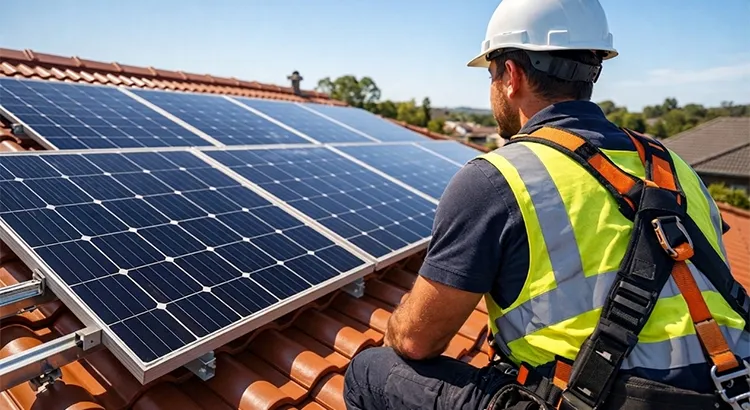
Starting 1 May 2026, the rules for connecting new or upgraded solar and battery systems on Western Australia’s South West Interconnected System (SWIS) will be updated. These changes are designed to allow larger systems, enable higher exports to the grid, and support more flexible energy management options for households and businesses.
Understanding the Updates
Western Power has published a revised WEM Procedure that specifies updated requirements for Standard Small User Facilities, which are connections with voltages below 1000 V and a combined Distributed Energy Resource (DER) capacity of up to 30 kVA. Key points of the update include:
- Larger systems allowed: Systems up to 30 kVA can now connect under a standard arrangement, both single- and three-phase. This increase from the previous 5 kVA limit allows for higher solar exports and prepares customers for potential participation in virtual power plants (VPPs) and other flexible energy products.
- Standards compliance: Inverters must follow AS/NZS 4777.2, including settings for Australian Region B.
- Remote disconnect requirements: Customers taking part in export programs like the Distributed Energy Buyback Scheme (DEBS) must have systems capable of remote disconnection and reconnection. Electricity retailers will nominate the technical solutions installers should follow.
- Export limits for non-compliant sites: Systems unable or unwilling to maintain connectivity must be capped at a 1.5 kW export limit and are exempt from remote disconnect rules.
Installers working with Synergy customers must also follow the Synergy Functionality Requirements and Interconnection Handbook, using the open-source CSIP-AUS protocol to ensure standard communication across all Australian states and territories.
Why the Changes Are Needed
The SWIS is the world’s largest isolated electricity grid. Its size, isolation, and increasing rooftop solar adoption create challenges in keeping the system stable.
These updates are intended to:
- Make it easier for more Western Australians to install rooftop solar and batteries.
- Enable the installation of larger systems safely.
- Support electricity retailers in offering flexible export products.
- Simplify compliance and legal obligations for installers and customers.
These changes represent the first step toward a more streamlined connection process and the eventual rollout of even larger solar and battery systems.
Industry Feedback and Adjustments
Energy Policy WA consulted extensively with industry and consumers. To give installers more preparation time, the start date has been delayed from 1 February 2026 to 1 May 2026. Wording around aggregate inverter capacity limits and the third-party aggregator framework has been clarified to reduce confusion. Ongoing feedback is encouraged to help refine the requirements further.
Preparing Before 1 May 2026
While nothing officially changes until May, installers are advised to:
- Review Western Power’s updated WEM Procedure.
- Access Synergy’s updated training materials, including online modules and in-person workshops.
- Coordinate with other electricity retailers to ensure compliance with their preferred technical solutions.
Key Changes Coming in May 2026
Installing New DER
Beginning in May 2026, electricity retailers will take responsibility for determining how inverter energy systems are commissioned. Installers working with customers of Synergy must follow the retailer’s commissioning procedures when setting up new or upgraded systems. This includes establishing communication using the CSIP-AUS protocol and ensuring that installations continue to meet all relevant technical standards as well as manufacturer commissioning requirements. Further details are provided in Synergy’s DER Functionality Requirements.
To be connected to the network, newly installed distributed energy resources only need to meet the core capabilities defined under CSIP-AUS. It is worth noting that CSIP-AUS compliance is already part of the WA Government residential battery program, which requires certain battery storage functions. These additional battery storage capabilities are not required for systems that are not applying for the WA rebate, but they may support participation in a Virtual Power Plant (VPP).
There are several situations where installations are considered compliant or are not required to continuously meet Synergy’s functional requirements:
- Inverters that are replaced with the same or a comparable model under warranty.
- Systems that were installed and commissioned before 1 May 2026.
- Installations that achieve remote connection and disconnection using another method approved by the customer’s electricity retailer, for example through SCADA.
- Systems installed in accordance with the DER Functionality Requirements of Synergy and commissioned using CSIP-AUS where the customer chooses a fixed export limit of 1.5 kW instead of another export arrangement. This option remains available to provide flexibility, particularly for the small number of sites where maintaining remote connection and disconnection for emergency solar management is difficult due to physical site constraints.
Upgrading Existing Solar Installations
If an existing solar system is upgraded, such as when a home battery or another inverter is added, the requirements set out in Western Power’s WEM Procedure for Standard Small User Facilities will apply.
In cases where some inverters or sites cannot communicate and cannot be updated through firmware, installers may use gateways to meet the site requirements. Gateways are available that support most of the current inverter market. The WA Government has also published a fact sheet outlining several options available for customers who are upgrading these legacy systems.
Existing Systems (No Upgrades)
Systems that were installed before 1 May 2026 and are not being upgraded will not be affected by the new rules. These installations can continue operating under the current connection and installation requirements that were in place at the time they were installed.
For the complete official details and guidance for installers and retailers, you can refer to the information published by Energy Policy WA on the WA Government website.
In a Nutshell
From 1 May 2026, updated connection requirements will apply to new and upgraded solar and battery systems on Western Australia’s southwest grid. The changes allow greater flexibility for systems up to 30 kVA, enable higher export potential where network capacity permits, and support future participation in flexible export products and virtual power plants. Installers will need to follow revised commissioning and communication requirements, while existing systems without upgrades will remain under current rules.
Frequently asked questions
Who is responsible for maintaining inverter functionality over time?
The introduction of the new rules from 1 May 2026 does not shift responsibility for device communication or system performance.
Installers remain responsible for correctly installing or upgrading solar and battery systems so they operate according to the required standards. After installation, electricity retailers or aggregators may carry out a short verification stage. During this stage they can check system performance remotely and confirm that export limits and operational settings are working correctly. A similar approach is already used in regions such as South Australia.
After the commissioning stage, the responsibility moves to the system owner. Owners need to ensure that the equipment continues to maintain the minimum level of connectivity required for proper operation. In many situations, restoring connectivity may only involve simple actions such as updating the internet credentials connected to the inverter.
If communication is interrupted, there are no penalties applied. In that situation, the system will move to a lower fixed export level. When communication is restored, the system can return to flexible export operation depending on the applicable program or product settings.
Electricity retailers are able to observe flexible or dynamic export systems and may contact customers if their system remains disconnected for a longer period.
What should installers explain to current or potential customers?
For most customers, the changes are not expected to cause major differences in day to day system operation. The main purpose is to align existing technical requirements and prepare the industry for future upgrades in how solar systems interact with the network.
Installers are encouraged to confirm that customers have a working internet connection available before attending installation visits. This is similar to the approach already used with the deX platform provided by Synergy for Emergency Solar Management.
A dedicated information resource has also been published by the Government of Western Australia. Installers can share this material with customers as it outlines what the updates mean for new and upgraded systems in practical terms.
Do installers need to revisit systems installed under the WA residential battery scheme with inverters above 5 kVA and a fixed 1.5 kW export limit?
No additional visit is required for those installations. Systems that were installed through the WA residential battery scheme already include the capabilities expected under the upcoming changes.
When electricity retailers begin offering flexible export options, customers with these systems will be able to choose to participate without needing a redesign of the original installation.
Can a customer’s current solar export arrangement be upgraded?
Yes. Installers may help bring a site up to the functionality required for flexible exports.
Sites that already meet the necessary functionality requirements can be prepared for flexible exports through agreement with the customer’s electricity retailer. For customers with Synergy, this involves enrolling the site using CSIP-AUS.
Customers who want to opt in to flexible exports or participate in a Virtual Power Plant, but whose sites do not meet connectivity requirements, should discuss with installers what system changes may be required.
What about commercial solar systems larger than 30 kVA?
The upcoming updates do not apply to systems above 30 kVA. The current focus is on systems at or below that capacity because they represent the majority of installations across the SWIS network.
What is changing about how installers currently communicate with Western Power?
At the moment, installers will continue submitting connection applications to Western Power in the same way as before. Work is underway between the WA Government, Western Power, and Synergy to simplify the process in the future. The goal is to allow installers to provide the required details once while they are on site rather than completing multiple steps.